
Projects
A Design with Honey Bees in Mind
- Challenge
- A productive backyard with honey bees and a large swath of lawn. Beyond it, an undeveloped lot that gets saturated by the surrounding hillsides, including a culvert that flows year-round.
- Approach
- Observe first, then design. An experimental first seeding of native plants, emphasising meadowfoam, uses the lot’s existing wet conditions; berms, swales, a pond and vernal pools are being explored as ideas, not yet built.
- Where It Stands
- In progress. The first native seeding is being tested. Observations through the wet season will guide the next phase.
Services Provided
The client wanted to build on her existing garden with planting that would support her honey bees. Fruit trees, perennials, and annuals were already established, alongside a large area of lawn.
Beyond that is an even larger back lot that functions as a natural water drainage area for the surrounding hillsides. Rather than trying to transform everything at once, we’re approaching the property gradually—observing the landscape, working with its existing conditions, and allowing each step to inform the next.
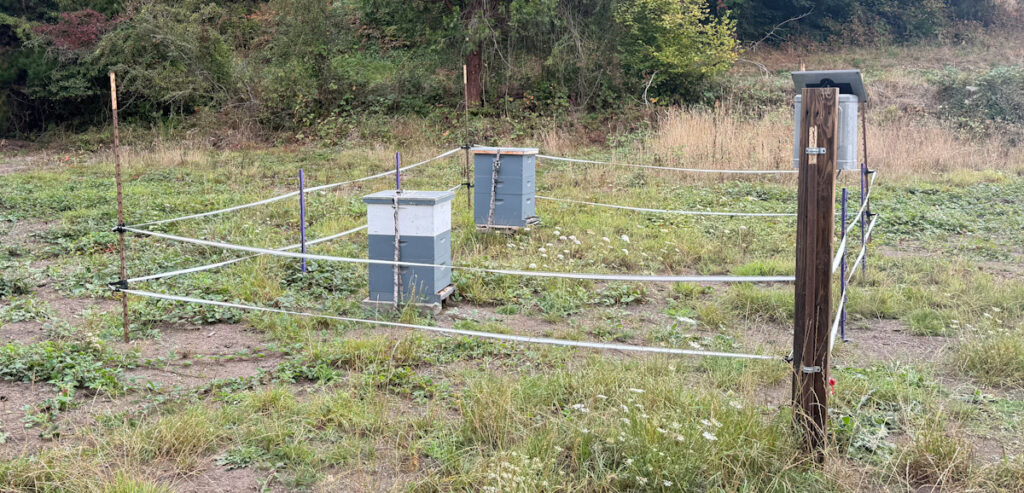
A Delight for Bees
With the larger plan in mind, the conditions of the back lot immediately brought one plant to mind: meadowfoam.
Meadowfoam is particularly interesting because it thrives in conditions similar to those already present on the property—wet, grassy areas, spring meadows, and vernal-pool environments.
Meadowfoam also has a connection to the client’s interest in honey bees: its flowers provide nectar for meadowfoam honey produced in the Pacific Northwest. It is known for an unusual flavor profile often described as reminiscent of toasted marshmallows, vanilla, and caramel.
The connection between the plant, the bees, and the landscape made meadowfoam a natural candidate for the project’s first intentional seeding.
Rather than starting with a finished planting design, the first round of seeding is being approached as an experiment: a mix of native plants with an emphasis on meadowfoam, taking advantage of the wet conditions already present in the back lot.
The trial will help us see how the planting establishes in the wet ground before planning the next phase.
Berms, Swales & Vernal Pools
The back lot receives runoff from the surrounding hillsides and water from a culvert that flows year-round. These conditions will guide the water-management plan.
Instead of treating that water simply as something to move away from the property, we’re exploring how the landscape might slow, capture, and use it.
The emerging concept includes berms, swales, a pond, and a series of vernal pools that could capture and manage rainwater and hillside runoff while creating additional habitat.
But before making major changes, there is an opportunity to observe. Observations through the wet season will provide valuable information about how water actually moves across the property—where it concentrates, where it spreads, how long it remains, and how the existing landscape responds.
For now, the plan is simple:
Observe first. Then design.
We’ll observe how the seeded plants establish and how water moves through the lot before deciding on the next phase.
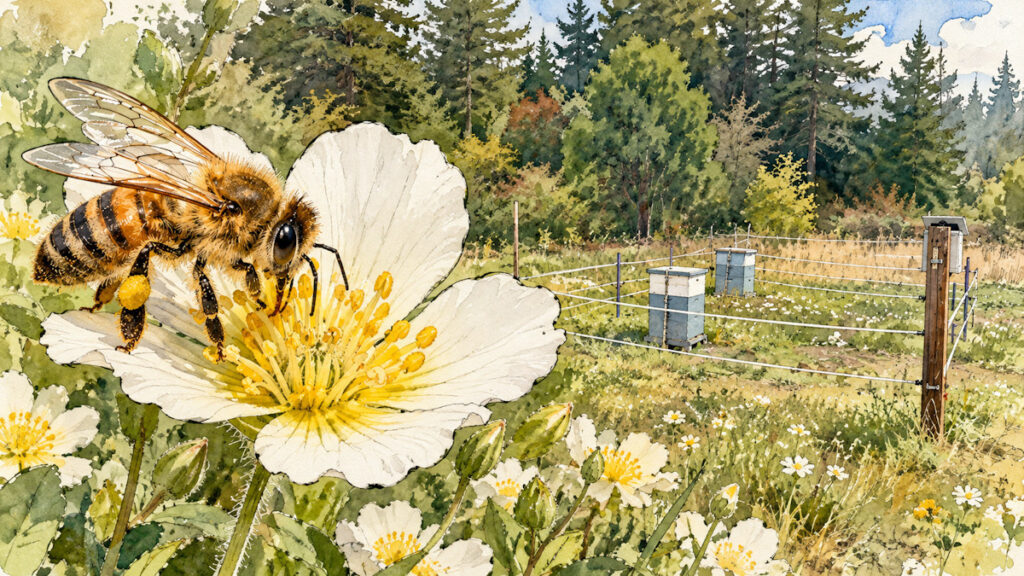
To Be Continued
We’ll share updates as the trial progresses, including what establishes, what needs adjusting, and which ideas we decide to pursue.