
Field Notes · Wildfire & Resilience
Planning a Wildfire-Resilient Landscape
Planning for wildfire starts with the relationship between your home and the surrounding landscape. Vegetation, combustible materials, and ongoing upkeep all need attention, especially close to buildings. If your home is near woodland or wildland vegetation, wildfire preparedness belongs in the landscape plan.
What Is Defensible Space?
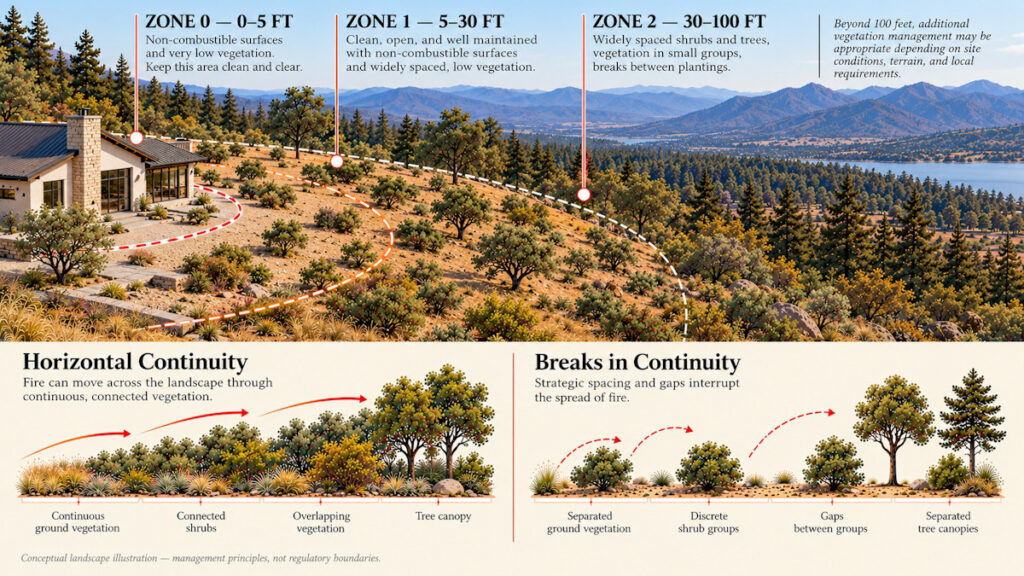
Defensible space is the area around a building where vegetation and other combustible materials are managed to reduce wildfire exposure. It can slow fire spread, reduce opportunities for ignition, and provide safer working conditions for firefighters.
California’s defensible-space framework uses three zones:
- Zone 0: 0–5 feet. Focus on reducing opportunities for embers to ignite materials immediately beside the building.
- Zone 1: 5–30 feet. Maintain carefully spaced vegetation and remove accumulated combustible debris.
- Zone 2: 30–100 feet. Reduce fuel buildup and interrupt connections between ground vegetation, shrubs, and tree canopies.
Work within your property boundaries. Check with your local fire authority for the requirements and compliance dates that apply to your property.
Zone 0: Protect the Area Closest to Your Home
Wind-driven embers can arrive ahead of a wildfire and ignite materials beside a building. Reducing combustible material in the first five feet helps limit that pathway to the home.
Use noncombustible surfaces such as gravel, stone, concrete, or pavers. Keep leaves, needles, dead vegetation, wood mulch, firewood, and combustible stored items out of this area. Pay particular attention beneath decks, beside siding, and where fences meet the building.
Design this space for easy inspection and cleanup. Check it regularly, especially after wind deposits fresh debris.
Zone 1: Reduce Continuous Vegetation
From five to thirty feet around the home, arrange planting with gaps that interrupt the spread of fire. Separate groups of shrubs with paths, paving, or other maintained spaces, and avoid connecting planting beds directly to the building.
Allow for mature growth so those gaps remain as plants fill out. Keep shrubs clear of low tree branches, remove dead growth, and clear accumulated leaves and needles.
Plan access into planting beds so routine pruning and cleanup remain manageable.
Zone 2: Think Horizontally and Vertically
From 30 to 100 feet around the home, or to your property line if closer, manage vegetation to reduce fuel buildup and interrupt pathways for fire. Some local jurisdictions call for defensible space extending up to 200 feet; check with your local fire authority before planning work beyond 100 feet.
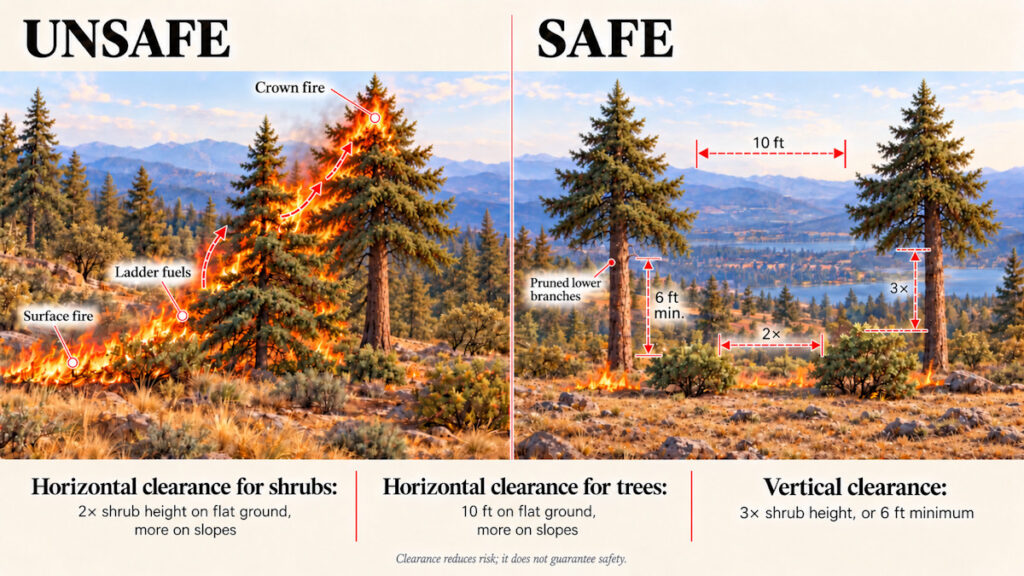
Look across the ground and upward into the trees. Dry grass, shrubs, and low branches can form a fuel ladder that allows fire to climb into the canopy. Selective thinning, appropriate pruning, and removal of dead material help break those connections.
Plan for separation between shrubs, between tree crowns, and between lower vegetation and tree branches. The spacing needed depends on slope, vegetation type, and mature plant size. Follow current local guidance when deciding what to retain, prune, or remove.
Remove Dead and Dry Landscape Material
Even healthy, green planting can conceal dry material. Check regularly for:
- Dead branches caught inside shrubs and trees.
- Dry grass and accumulated leaves or needles.
- Fallen limbs and pruning debris.
- Combustible debris beneath decks, stairs, and other structures.
Give particular attention to areas close to buildings and places where debris collects against fences or beneath dense planting.
Make cleanup part of ongoing landscape care. Revisit these areas after strong winds and seasonal leaf fall so material does not build up between maintenance visits.
Don’t Overlook the Corners
Small, awkward spaces can collect debris and become difficult to maintain. Check narrow side yards, fence corners, areas behind sheds, and the spaces beneath decks and stairs.
Look for places where planting crowds a structure, fallen leaves become trapped, or stored items block access for cleanup.
Near buildings, use noncombustible surfaces and keep these spaces accessible. Farther out, leave enough room around planting to inspect, prune, and remove debris as plants mature.
Design for Emergency Access
Keep driveways and access routes clear of encroaching vegetation, stored equipment, and other obstacles. Make sure your address is easy to see from the road.
On rural properties, review narrow sections, overhanging branches, gates, and places where vehicles need room to turn. Consider how plant growth and seasonal conditions could affect access over time.
Check with your local fire authority for access requirements that apply to your property, including road width, overhead clearance, gates, and turnarounds. Plan planting and routine maintenance around those needs.
Plan for Fire and Ecological Health
Begin with the areas closest to buildings, where reducing combustible material is the priority. Farther out, use selective vegetation management to retain appropriate trees, protect soil, and support habitat while meeting defensible-space needs.
Choose native and regionally adapted plants suited to the site, with room for mature growth and access for maintenance. Use paths and other noncombustible spaces to separate planting groups.
On slopes, plan thinning and removal with erosion in mind. The aim is a managed landscape that reduces fuel connections while retaining the roots, soil cover, and vegetation appropriate to each part of the property.
Choose the Right Plants
Plant selection works together with spacing, placement, and maintenance. No plant is fireproof, and a plant described as fire-resistant can still burn.
Beyond the area immediately beside buildings, choose plants with:
● A good fit for the site. Match species to the soil, sunlight, climate, and available moisture.
● Manageable mature growth. Allow enough room to maintain separation from buildings and neighboring plants.
● Accessible branching. Choose forms that let you inspect and remove dead material.
● Manageable litter. Consider how much debris a plant sheds and where it will collect.
Native and regionally adapted plants can support habitat and suit local growing conditions, but their placement still needs to follow defensible-space guidance.
Check shrubs, including coyote brush, for accumulated dead growth, and review their spacing and maintenance needs as they mature.
Think Beyond the Plants
Fences, decks, sheds, pergolas, firewood, and outdoor furniture can create connections between the landscape and the home. Review where combustible materials touch the building or sit close enough to expose it to flames.
Check rooflines, gutters, deck surfaces, and the spaces beneath structures for accumulated leaves and needles. Include these areas in routine cleanup.
Pair landscape work with home hardening: improvements to roofs, vents, windows, siding, decks, and other building components that reduce vulnerability to wildfire. A well-maintained landscape is one part of preparing the whole property.
Design for Long-Term Maintenance
Plan for the landscape at maturity. Shrubs spread, tree branches extend, and planting gaps can close. Choose plants and spacing that allow for growth while keeping access open for inspection and care.
Match the maintenance plan to the time, budget, and help available. If a planting needs frequent cutting to stay within its space, consider relocating it or choosing a smaller species.
Review the landscape each year for crowding, dead growth, and changes in plant health. Adjust the planting as conditions change so the design remains practical to maintain.
Create a Managed Transition
Plan the landscape as a transition from the home to the surrounding vegetation:
- Immediately beside buildings: Use noncombustible surfaces and keep combustible material clear.
- Within the garden: Maintain separated planting groups, open access, and room for ongoing care.
- Toward surrounding woodland or wildland: Manage fuel buildup and vegetation connections while retaining appropriate trees and habitat.
Let the slope, existing vegetation, property boundaries, and local fire requirements guide that transition. Each part of the landscape needs a level of care suited to its location and its relationship to the home.
Where to Begin
Start beside the home and work outward. Identify accumulated debris, combustible materials against buildings, crowded planting, and obstacles to access.
Prioritize the work by urgency, then plan improvements around your budget and maintenance capacity. Some areas may need cleanup or selective pruning; others may benefit from relocated planting, different materials, or changes to the layout.
Coordinate landscape improvements with home hardening and your household’s evacuation plan. Review the property regularly and revisit priorities as vegetation grows and conditions change.
Helpful Resources
- Cal Fire: Defensible Space – guidance on defensible space zones, vegetation spacing, on-going maintenance, wildfire preparedness, and fire safety.
- Theodore Payne Foundation: Wildfire Resilient Plants – a nonprofit dedicated to California native plants. Their wildfire-resilient plant collection highlights natives suited for fire-conscious landscapes, particularly for Southern California gardens.
 Start the Conversation