
Field Notes · Invasive Plants
Himalayan Blackberry: Identify, Remove, Restore
<Volunteers help manage invasive Himalayan blackberry at Prairie Creek State Park.>
A tangled blackberry patch can hide a fence, close a trail, or take over a neglected corner of the garden. On the North Coast, managing it starts with knowing which blackberry you have.
Confirm the plant’s identity before clearing: native Pacific blackberry deserves a different response from invasive Himalayan blackberry. Then plan beyond the initial removal—how you’ll manage regrowth, protect the soil, and establish the vegetation you want in its place.
What Is Himalayan Blackberry?
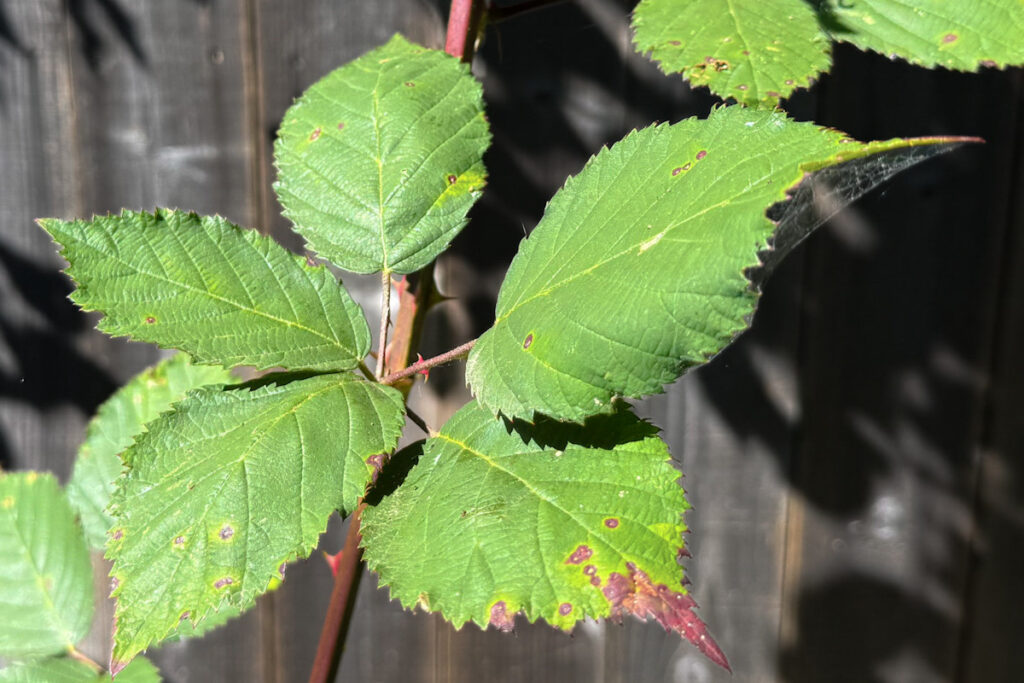
Himalayan blackberry (Rubus armeniacus) is a non-native, invasive shrub that forms dense thickets of long, arching canes. Its growth can shade out other plants and make access and maintenance difficult.
It readily establishes on disturbed ground, including roadsides, fence lines, pastures, and creek corridors. On Humboldt County properties, these are useful places to check for new patches before they expand.
Finding a small patch early gives you a more manageable starting point. Before removing it, confirm its identity and look for native plants growing among the canes.
Himalayan Blackberry vs. Pacific Blackberry
Pacific blackberry (Rubus ursinus), also called California or trailing blackberry, is native to our region. Himalayan blackberry (Rubus armeniacus) is invasive. Check several features together before deciding what to remove.
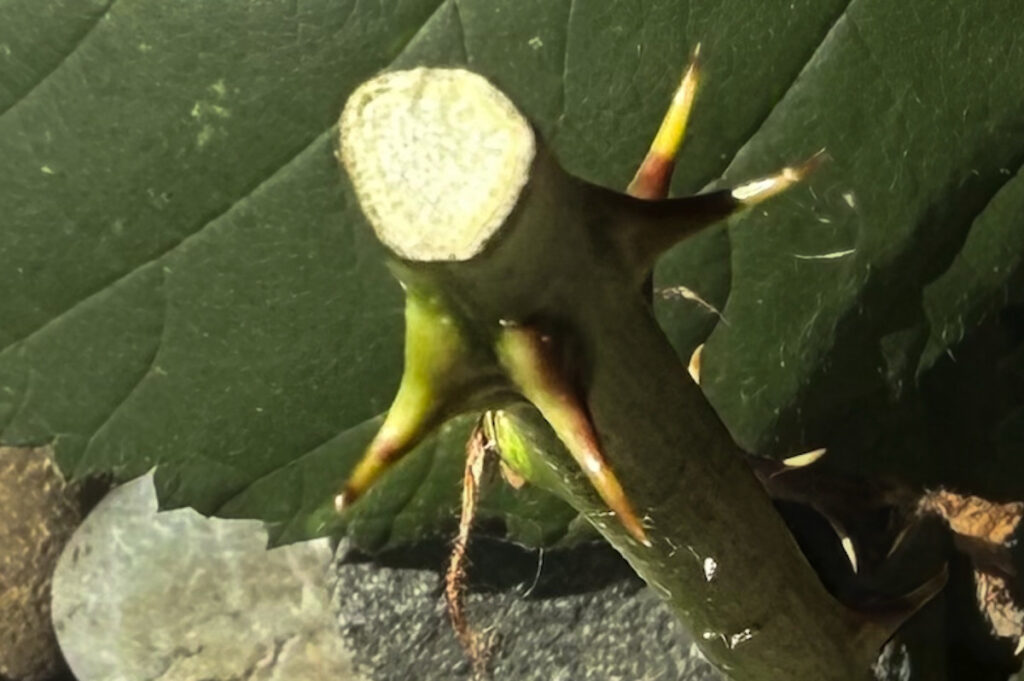
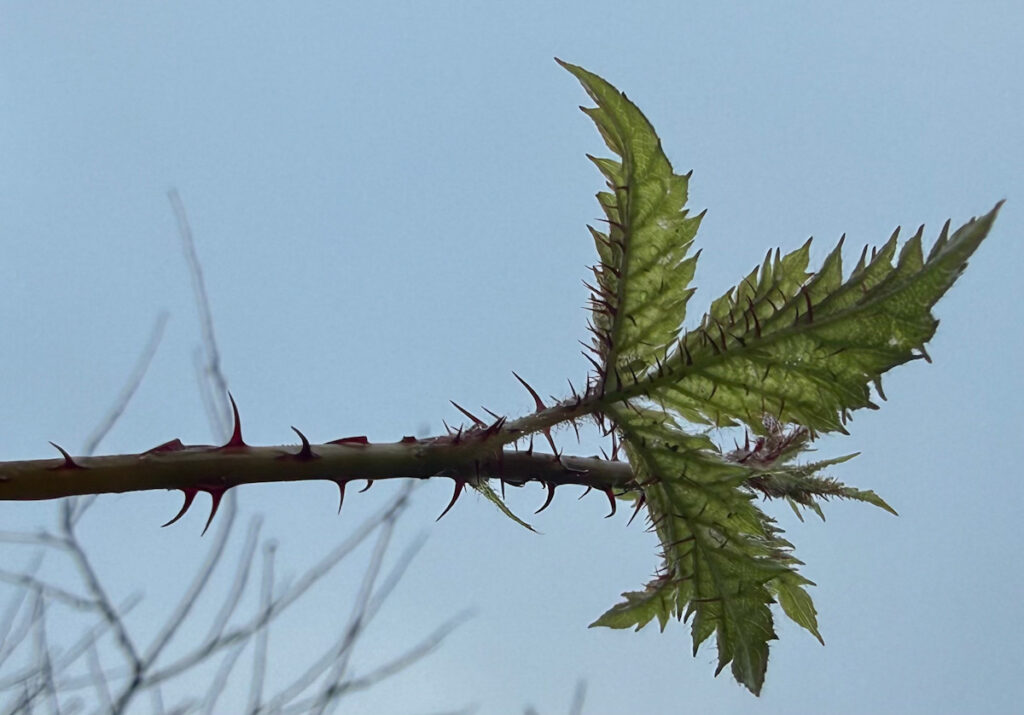
| Feature | Himalayan blackberry | Pacific blackberry |
|---|---|---|
| Growth habit | Robust, arching canes that form tall, dense thickets | Slender canes that trail along the ground or scramble through vegetation |
| Stems | Thick and distinctly angled | Slender and generally rounded |
| Prickles | Large, stout, often hooked | Smaller, finer prickles |
| Leaves | Commonly five leaflets, sometimes three | Commonly three leaflets, sometimes five |
Leaflet counts vary, so a three-leaflet leaf alone does not confirm Pacific blackberry. Compare the stems, prickles, and overall growth as well.
If the identity remains uncertain, seek help from a local native-plant specialist or UC Cooperative Extension before clearing the patch.
Why Himalayan Blackberry Is a Problem
Dense Himalayan blackberry thickets can shade out native plants and leave less room for shrubs, wildflowers, grasses, and young trees to establish. In creek corridors and restoration areas, this can work against efforts to recover a more diverse plant community.
The same growth creates practical problems. Canes spread across paths, cover fences, encroach on pasture, and hide drainage features. Accumulated dead canes also add combustible material.
Prioritize patches that interfere with access, threaten valued vegetation, obscure drainage, or contribute to fuel buildup near buildings. Plan removal alongside erosion protection, replacement planting, and the follow-up care needed to manage regrowth.
Assess the Site Before Clearing
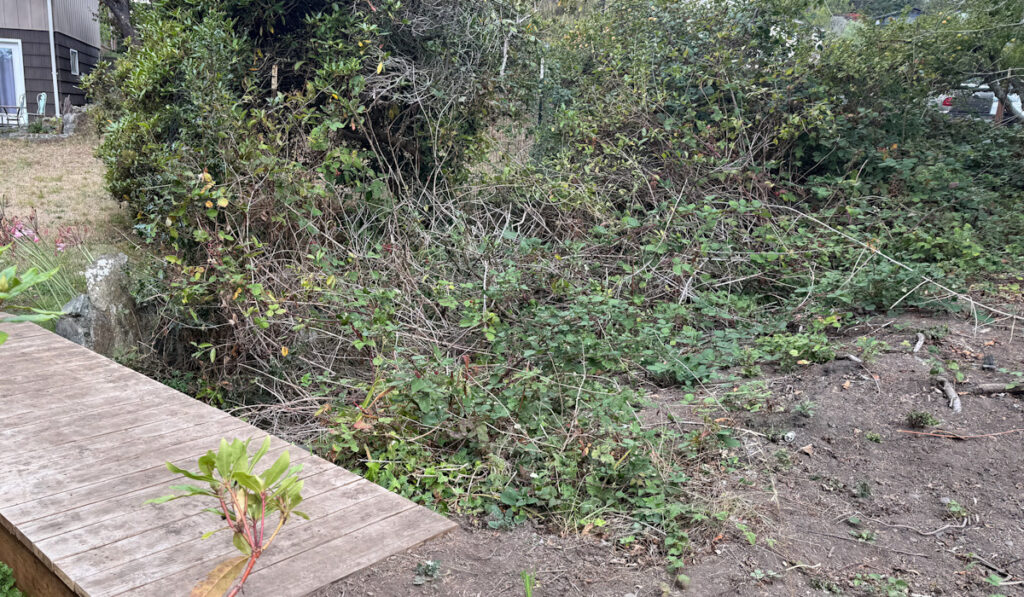
Walk the patch and its edges before choosing a removal method. Look for native plants to retain, nearby trees, drainage features, and access for both the initial work and follow-up care.
Consider:
- Soil and slope: Could digging or equipment expose soil to erosion or compaction?
- Waterways: Is the patch beside a creek, wetland, or drainage channel?
- Wildlife: Is vegetation being used for nesting or shelter?
- Surrounding growth: Will blackberry continue spreading in from neighboring land?
- Follow-up capacity: How much cleared ground can you realistically monitor and restore?
Use these observations to choose the scale, timing, and methods of work. For sensitive sites, seek site-specific advice before substantial clearing.
How to Remove Himalayan Blackberry
Cutting the canes opens up a patch, but established plants can regrow from the root crown and remaining roots. Treat the first clearing as the beginning of a management plan.
- Assess the patch. Identify plants to retain, access constraints, nearby waterways, and areas vulnerable to erosion.
- Clear the canes. Wear protective clothing, gloves, and eye protection. Work in manageable sections so you can see the ground and surrounding vegetation.
- Address the root crowns. Where practical, dig out crowns while limiting soil disturbance and protecting nearby roots. On steep or sensitive ground, choose a method suited to those conditions.
- Manage cut material. Keep viable crowns and rooting cane tips from contacting moist soil, and follow local disposal guidance.
- Return for regrowth. Check for new shoots and seedlings, and repeat treatment as needed.
- Restore and maintain. Protect exposed soil and establish appropriate replacement vegetation while continuing blackberry control.
For a large infestation, phase the work around the area you can realistically revisit and maintain.
Restore the Landscape After Blackberry Removal
Plan for the cleared ground before removal begins. Decide which existing plants to retain, how to protect exposed soil, and what vegetation will replace the blackberry.
Choose native or regionally adapted plants suited to the site’s light, soil, moisture, and intended use. Depending on the setting, the planting might include shrubs, grasses, sedges, wildflowers, or trees.
Leave access for follow-up blackberry control while replacement plants establish. Check for new shoots among the planting, manage competing weeds, and provide establishment watering where needed.
Phase removal and planting together so you can care for each treated area. On slopes and near waterways, select erosion-protection measures suited to the site before exposing large areas of soil.
A Blackberry Management Checklist
- Identify. Confirm you’re dealing with Himalayan blackberry rather than native Pacific blackberry.
- Assess. Check access, slopes, waterways, wildlife use, and potential soil disturbance.
- Prioritize. Start with small patches and areas affecting access, buildings, drainage, or valued plants.
- Treat. Use a method suited to the site and work in manageable phases.
- Restore. Protect exposed soil and establish appropriate replacement vegetation.
- Return. Monitor for regrow, repeat control as needed, and care for new planting.
Frequently Asked Questions About Himalayan Blackberry
Is Pacific blackberry invasive?
Pacific blackberry is native to our region. It can spread vigorously and may need management where it conflicts with paths or planting, but it should be distinguished from invasive Himalayan blackberry.
How can I tell Himalayan blackberry from Pacific blackberry?
Compare several features together: growth habit, stem shape, prickles, and leaves. Leaflet count alone is not enough. Use the comparison table above and seek identification help if uncertain.
Can I just mow Himalayan blackberry?
Mowing cuts back the canes, but established plants can regrow. Repeated cutting may be part of a control plan; a single mowing is unlikely to resolve the patch.
What should I do with cut blackberry?
Keep viable crowns and rooting cane tips from contacting moist soil. Contain material during transport and check local disposal guidance before using a green-waste service or composting it.
When should I remove Himalayan blackberry?
Choose timing around the method, soil conditions, wildlife use, and follow-up work. Moist soil can make digging easier, but saturated ground is vulnerable to disturbance and compaction. Avoid clearing more ground than you can stabilize and maintain.
Should I remove blackberry near a creek?
Assess the site before clearing. Protect streambanks, existing native vegetation, and wildlife habitat. Check applicable requirements with the relevant agencies before work that could disturb a creek, its banks, or a wetland.
What should I plant afterward?
Choose native or regionally adapted plants suited to the site’s light, soil, moisture, and intended use. Protect exposed soil and continue checking for blackberry regrowth while the new planting establishes.
 Start the Conversation