
Field Notes · Plants & Habitat
Integrated Pest Management: Before You Spray
A healthy landscape has insects—and some chewed leaves. The question is whether the damage calls for action.
Integrated Pest Management (IPM) starts with observation: identify what’s happening, assess the damage, and check the conditions contributing to it. Prevention, beneficial organisms, and targeted treatments all have a place. The response should fit the problem.
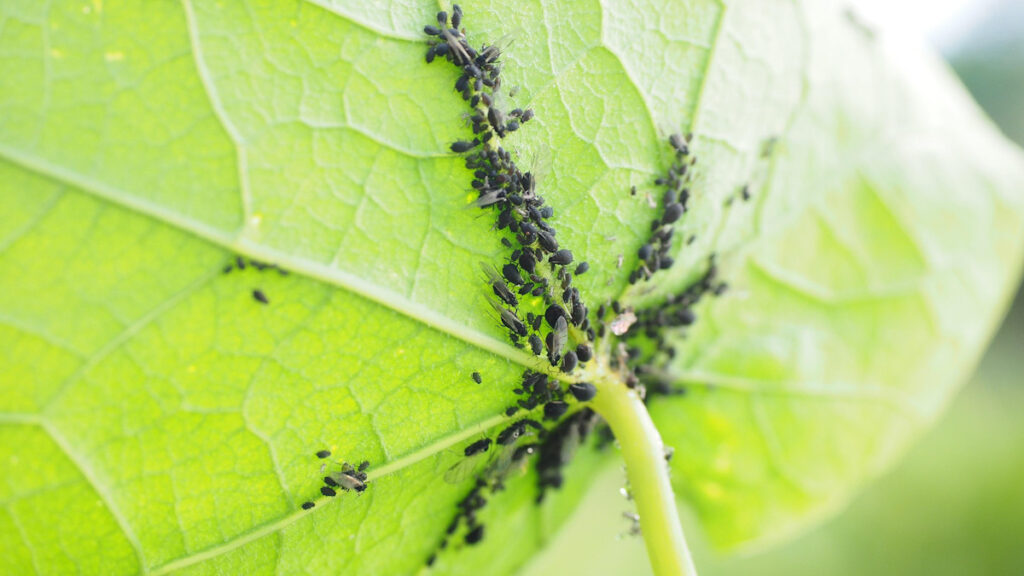
1. Start by looking
Before choosing a treatment, work out what is causing the damage. Insects, disease, drought, overwatering, poor soil conditions, and animal browsing can call for very different responses.
Look closely and ask:
- What signs of insects, disease, or other damage can you find?
- Which plants or parts of the garden are affected?
- Is the damage increasing, or are you seeing old damage?
- Is the plant producing healthy new growth?
- Are predators or other beneficial insects present?
A few damaged leaves may not call for treatment. Watch how the plant responds and whether the problem is spreading. Photos and brief notes can help you compare conditions between visits.
2. Not every insect is a pest
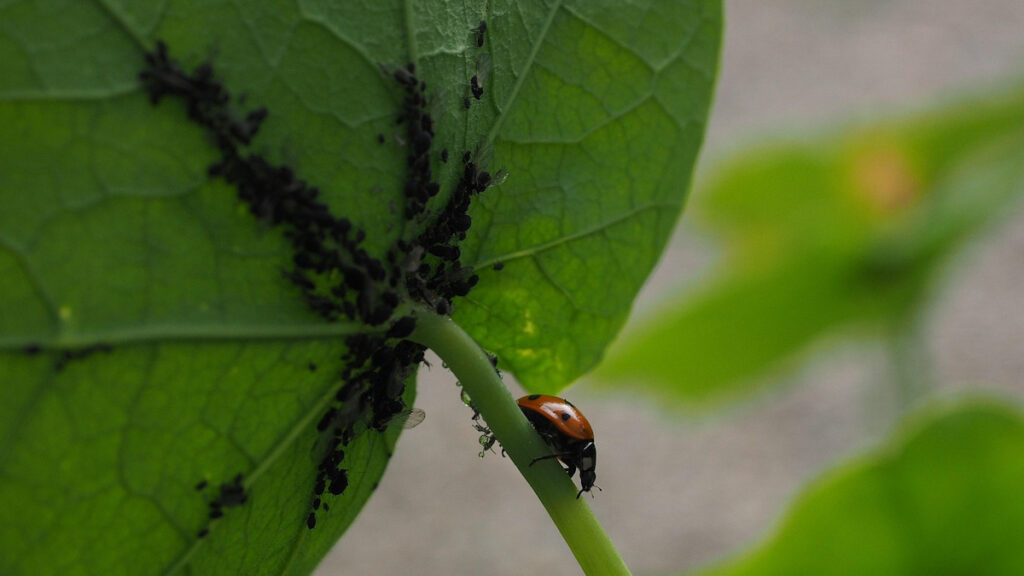
Lady beetles, lacewings, parasitic wasps, and spiders can help keep pest populations in check. Look for these natural enemies alongside the insects causing damage.
A shrub with aphids may also have lady beetle or lacewing larvae feeding on them. If the plant is growing well and the damage remains acceptable, keep watching before deciding whether to treat.
Give those natural enemies time to work. A pesticide that kills them along with the pest can disrupt the control already happening in your garden.
3. Set a threshold
Finding a pest doesn’t automatically mean it needs control. Decide how much damage you can accept and what would prompt you to act.
A few chewed leaves on an established shrub may be tolerable. Damage that threatens a young plant’s establishment or affects a food crop may call for earlier intervention.
There is no single threshold for every garden. Consider the plant’s health, the extent and pace of damage, the season, and the consequences of waiting.
The aim is to limit damage to an acceptable level. Unnecessary treatments can also kill beneficial insects and make the landscape less resilient.
4. Fix the conditions
Look at how the plant is growing and how the site is maintained. Unsuitable planting, watering problems, and crowded growth can contribute to recurring pest and disease problems.
As part of prevention:
- Choose plants suited to the site’s soil, sunlight, climate, and available moisture.
- Adjust watering to the plant’s needs and actual soil moisture.
- Check drainage and soil compaction where plants are struggling.
- Allow room for mature growth and prune where needed.
- Include a variety of suitable flowering plants to support natural enemies of pests.
- Remove affected plant material when recommended for the identified pest or disease.
Addressing these conditions can reduce recurring problems and the need for repeated treatment.
5. Pesticides: a tool, not a reflex
IPM includes pesticides when they are appropriate for the identified problem. If monitoring shows that action is needed, consider physical controls, changes in care, and other suitable methods alongside pesticide options.
If a pesticide is warranted:
- Choose a product labeled for the pest, plant, and application site.
- Select an effective option with the lowest practical risk to people, pets, beneficial organisms, and the environment.
- Limit treatment to where it is needed, following the label.
- Consider application timing and potential exposure to pollinators and other wildlife.
Read and follow the entire label, including protective equipment, weather restrictions, and precautions around water. Follow applicable local requirements.
After treatment, check the results before deciding whether further action is needed.
The IPM mindset
IPM is an ongoing process: identify the problem, monitor what is happening, decide whether action is needed, and evaluate the results.
Prevention belongs throughout that process. Keep checking growing conditions and give natural enemies room to work. When intervention is needed, choose a response suited to the pest, the plant, and the site.
Afterward, look for reduced damage and healthy new growth. Use what you learn to guide the next decision.
 Start the Conversation