
Field Notes · Materials & Design
Let’s Rock It: Using Rocks and Boulders in the Landscape
A landscape without rocks can feel like a room without tables.
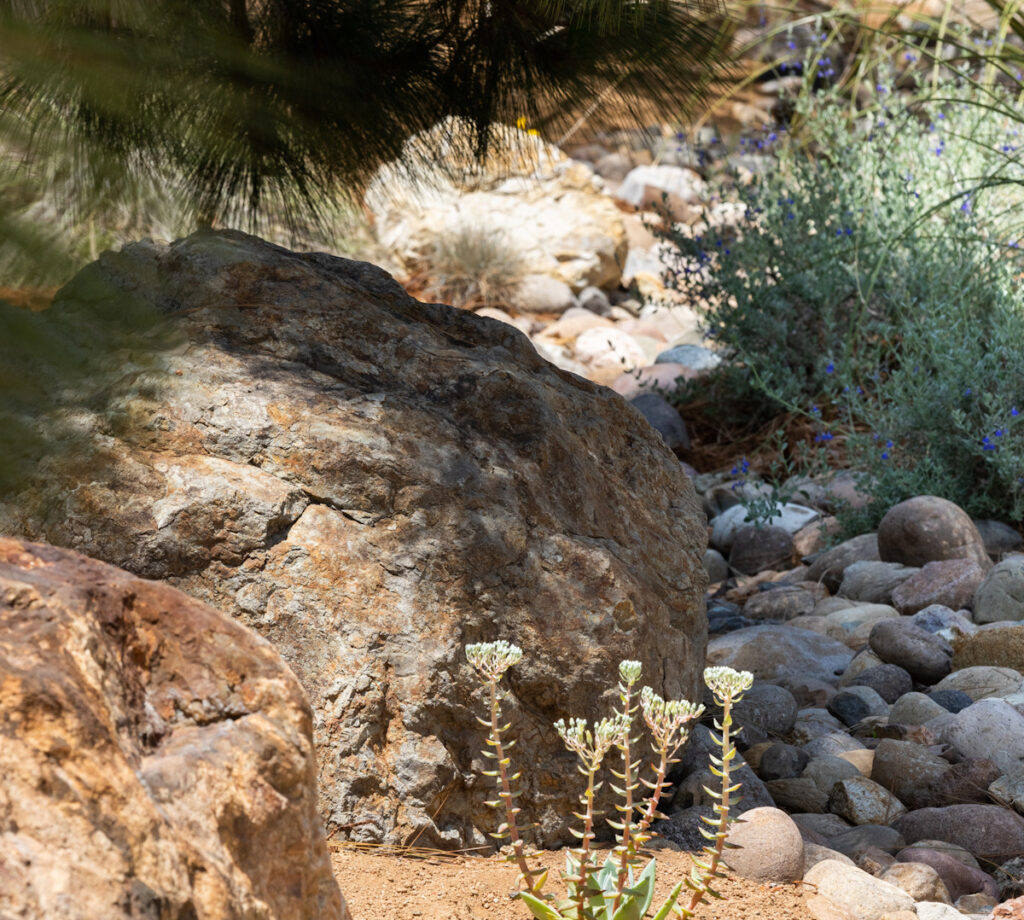
Rocks and boulders give a garden structure. Their scale, shape, and placement determine how they relate to the surrounding plants and land. A well-placed boulder should feel settled into the garden.
Start with the Site
Before choosing stone, look at the slope, existing planting, drainage, and how people use the space. Decide what you want the stone to accomplish:
- Define a path or planting edge.
- Frame a view or create a focal point.
- Provide a place to sit.
- Form part of a planned drainage or erosion-control feature.
- Connect different areas of the garden.
Stone already present on the property may offer a starting point. Its color, shape, and weathering can guide the choice of additional material.
Rocks for Water Management & Erosion Control
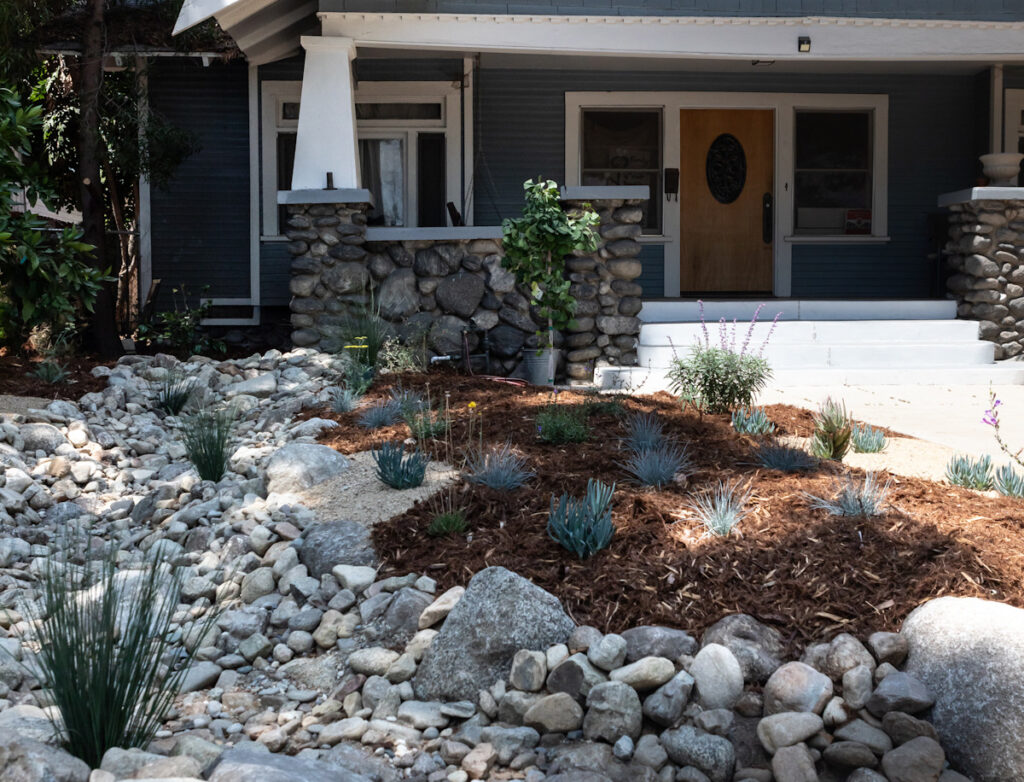
Stone can form part of a dry creek bed, drainage channel, downspout outlet, or other feature designed to manage runoff. Begin by tracing where water enters, where it collects, and where it can safely go.
Choose stone size and placement for the slope and expected flow. Small decorative pebbles may wash away in concentrated runoff. Adding rocks alone won’t resolve a drainage problem.
A well-designed dry creek bed can serve its drainage purpose while becoming part of the garden. Combine suitable stone with planting along the edges, keeping the flow path and overflow route clear. Plan the drainage first, then develop the form and planting around it.
Rocks as Landscape Design Features
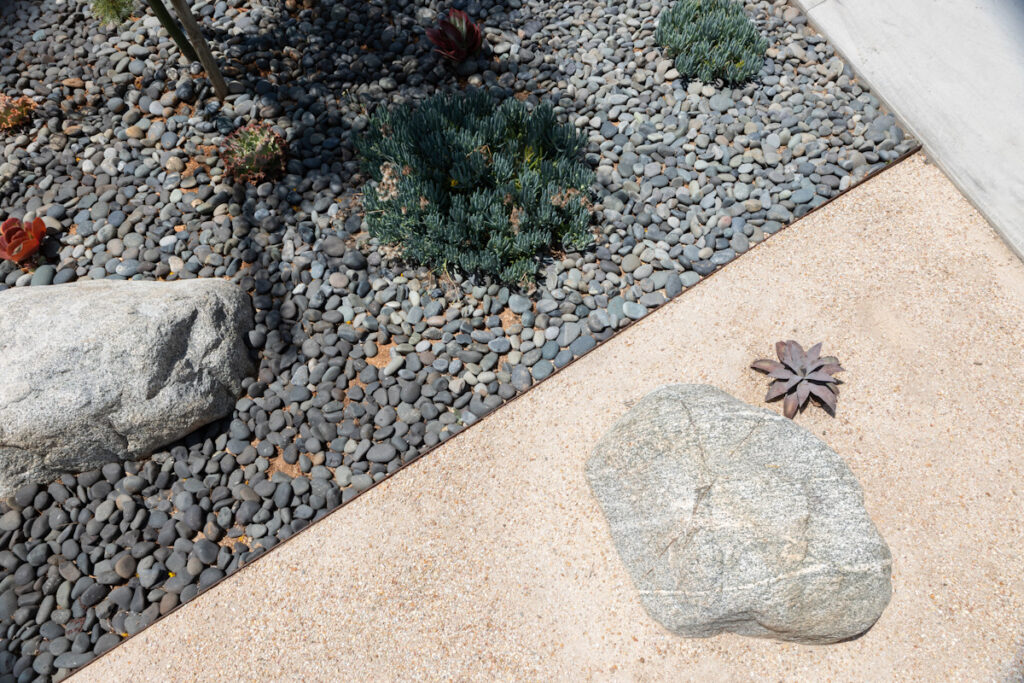
Stone gives a garden structure through the seasons. A boulder can anchor a planting bed, mark a turn in a path, or draw attention to a view.
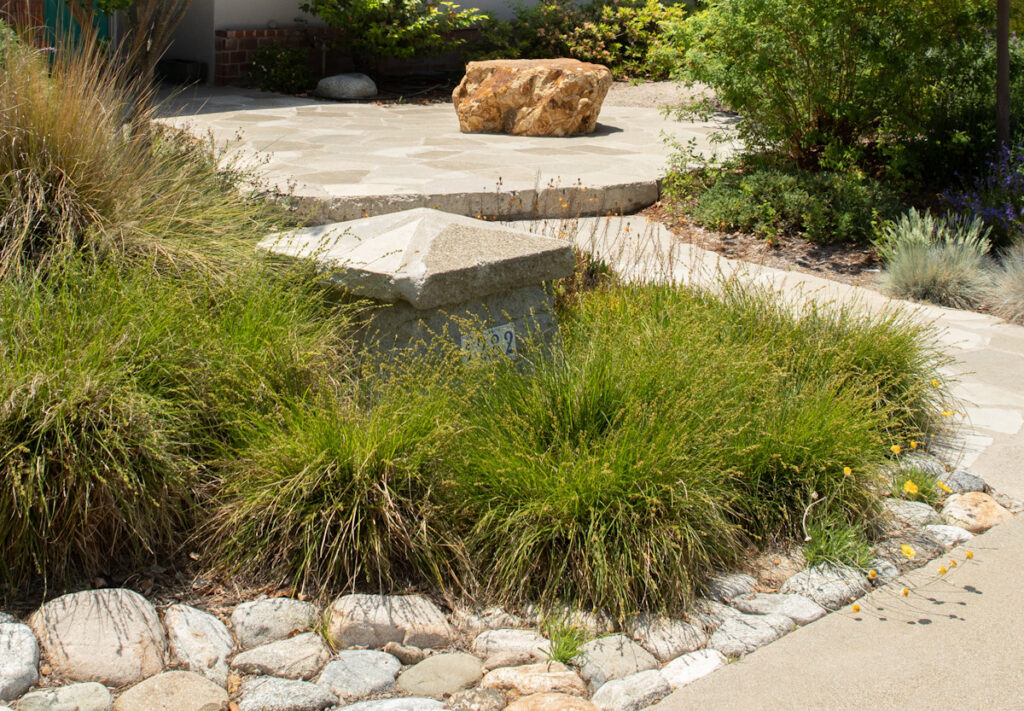
A focal boulder needs enough surrounding space to appreciate its form. Stone along a path should help define the route while leaving comfortable room to pass.
Consider how the stone relates to nearby paving, buildings, and planting. Repeating a compatible color or texture can connect different parts of the garden. Leave quieter areas around prominent features so each has room to be seen.
The Art of Boulder Placement
A boulder’s character changes with its orientation. Turn it to explore different faces, and consider how its lines relate to the slope and surrounding stone.
Before settling on placement, consider:
- Scale: Judge its size within the garden, including the mature planting around it.
- Shape and orientation: Choose the face and angle that suit the composition.
- Grouping: Vary sizes and spacing so each stone relates to the others.
- Viewpoints: Check the arrangement from paths, seating areas, and windows.
For a naturalistic effect, partially bury the base so the boulder appears to emerge from the ground. The depth and support needed depend on the stone and site.
Plan delivery and equipment access before purchasing. Large boulders need experienced handling and secure installation, with care for existing trees, soil, paving, and buried utilities.
Rocks and Native Plants
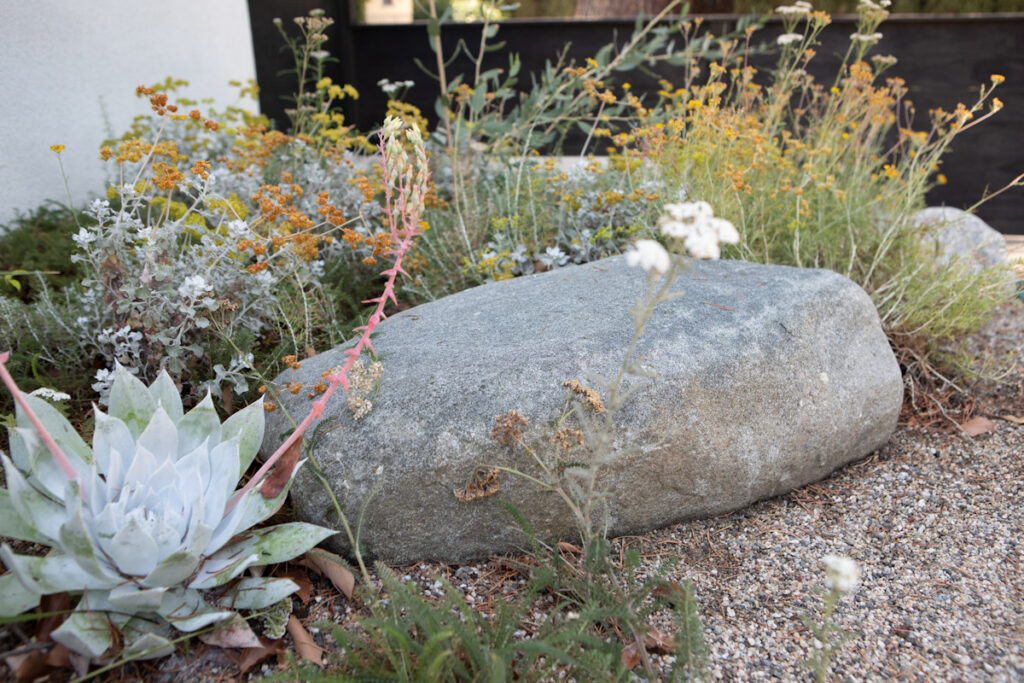
Fine leaves can soften a boulder’s edge, while an open space around a rock can reveal its shape and weathered surface.
Choose native and regionally adapted plants for the actual growing conditions: soil, sunlight, moisture, and local climate. A coastal Humboldt garden and an inland Southern California hillside will need different plant palettes.
Plan for mature growth. Leave enough space for selected boulders to remain visible, and give plants room to develop their natural form without repeated cutting.
Vary the relationship between stone and planting. Some edges can disappear into foliage; others can remain exposed. That balance helps the stone feel part of the garden as it matures.
Sustainable Rock Landscaping
Consider where the stone comes from, how it reaches the property, and what installation will disturb. Before ordering:
- Assess whether existing or salvaged stone can serve the design.
- Ask suppliers about the stone’s origin and available regional sources.
- Plan delivery and equipment access to limit disturbance to soil and existing planting.
- Include transport, placement, and any repairs in the budget.
- Leave suitable space for plants, soil cover, and ongoing care.
Let the intended use guide how much stone you need. A few well-placed boulders may provide all the structure a planting area needs.
Think through maintenance, too: how you will remove trapped debris, manage weeds, reach irrigation, and care for plants around the stone.
Design for the Long Term
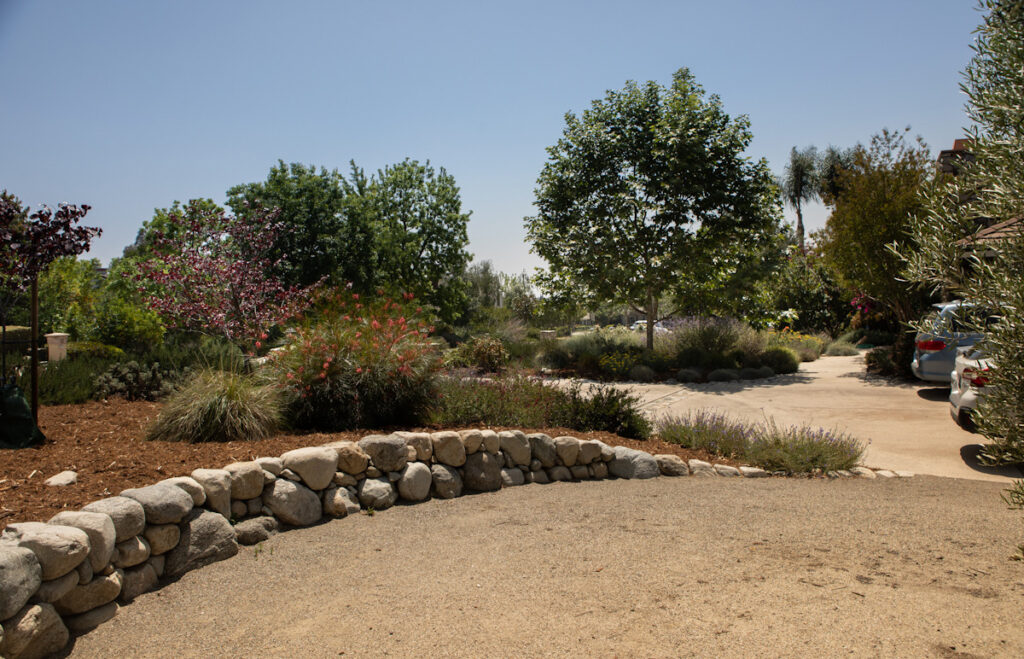
Picture the garden several years after installation. Plants will spread, views may change, and spaces that once felt open can become crowded. Allow for that growth when placing stone.
Keep paths comfortable to use, leave access for maintenance, and consider which boulders you want to remain visible as planting fills in.
Revisit the arrangement as the garden matures. Selective pruning or changes to nearby planting may be enough to reveal a stone’s form again.
Frequently Asked Questions
Are rocks a good choice for sustainable landscaping?
They can be. Consider their source, transport, installation, and purpose. Reusing suitable stone and limiting disturbance to soil and planting can help make the choice more responsible.
Can rocks help with erosion and drainage?
Stone can form part of a designed drainage or erosion-control feature. Its effectiveness depends on the slope, soil, water flow, stone size, and installation. Begin by understanding the drainage problem and planning a safe route for the water.
What plants work well with rocks?
Choose plants suited to the site’s climate, soil, sunlight, and moisture. Native and regionally adapted species offer many possibilities. Allow for mature growth so plants have room to develop and selected stones remain visible.
Plan the Stone with the Garden
If you’d like help selecting materials or planning their placement, get in touch to discuss your landscape.
 Start the Conversation