
Field Notes · Invasive Plants
English Ivy, Cape Ivy, or Wild Cucumber? Know Your Vine
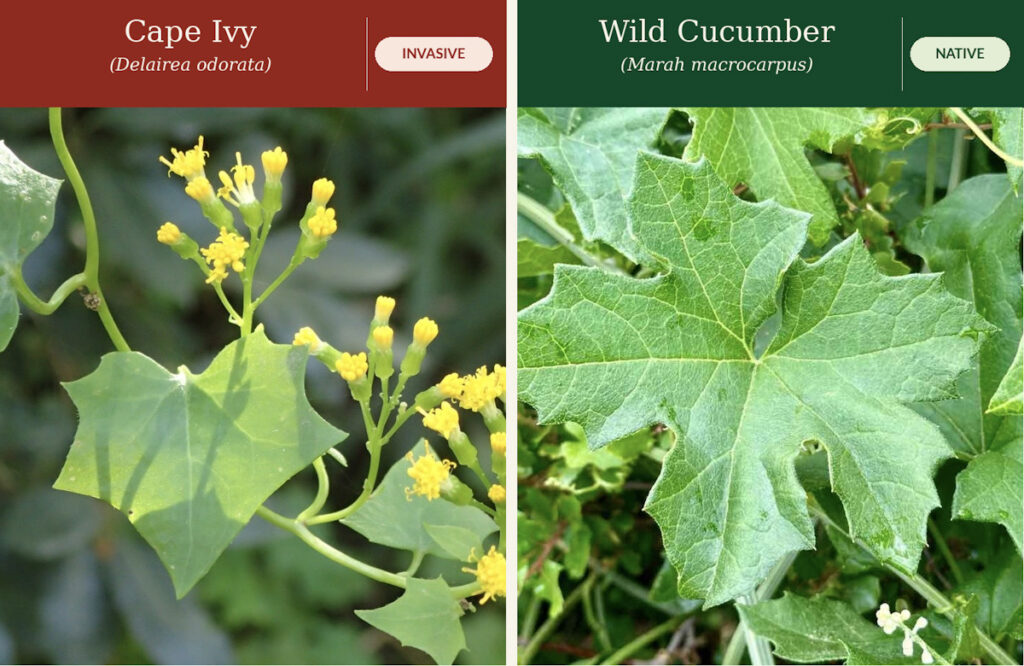
A green tangle climbing through a shrub can look like one plant from a distance. Up close, you may find several vines growing together.
English ivy, Cape ivy, and wild cucumber are worth learning to distinguish. English ivy and Cape ivy are invasive in California; our native wild cucumbers belong to the genus Marah.
Before pulling, trace a stem and look at how it climbs. Check the leaves, flowers, and fruit when present. Identifying the vine helps you decide what to retain, what to manage, and how to avoid spreading fragments during removal.
The Short Version
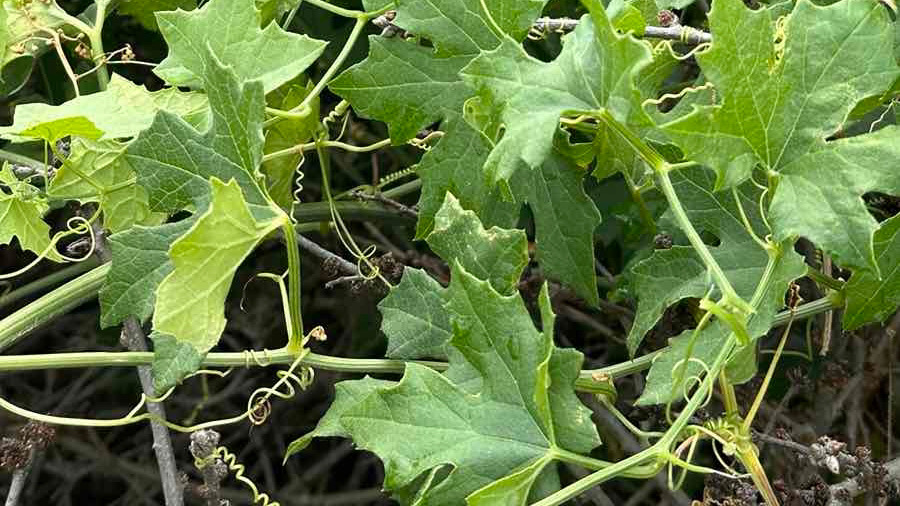
© 2026 Ron Vanderhoff, CC BY-NC 4.0, cropped from original.
Start with how the vine climbs:
- Wild cucumber: Uses thin, curling tendrils to grip nearby vegetation.
- Cape ivy: Scrambles and twines through plants, with smooth, fleshy stems.
- English ivy: Clings to surfaces with aerial rootlets and develops woody stems.
Trace each stem separately where vines grow together. Then compare leaves, flowers, and fruit before confirming the identification.
Cape Ivy
Cape ivy (Delairea odorata) belongs to the sunflower family. Look for smooth, fleshy stems and glossy, lobed leaves. Clusters of small yellow flower heads provide another useful identification feature.
It scrambles through shrubs and trees and spreads across the ground, forming dense mats that can shade and overwhelm other vegetation. It is particularly troublesome in coastal creek corridors, moist forests, and oak woodlands.
Removal needs care: stem fragments and underground growth can resprout if left behind. Plan how to collect the material and revisit the site before beginning work.
Wild Cucumber
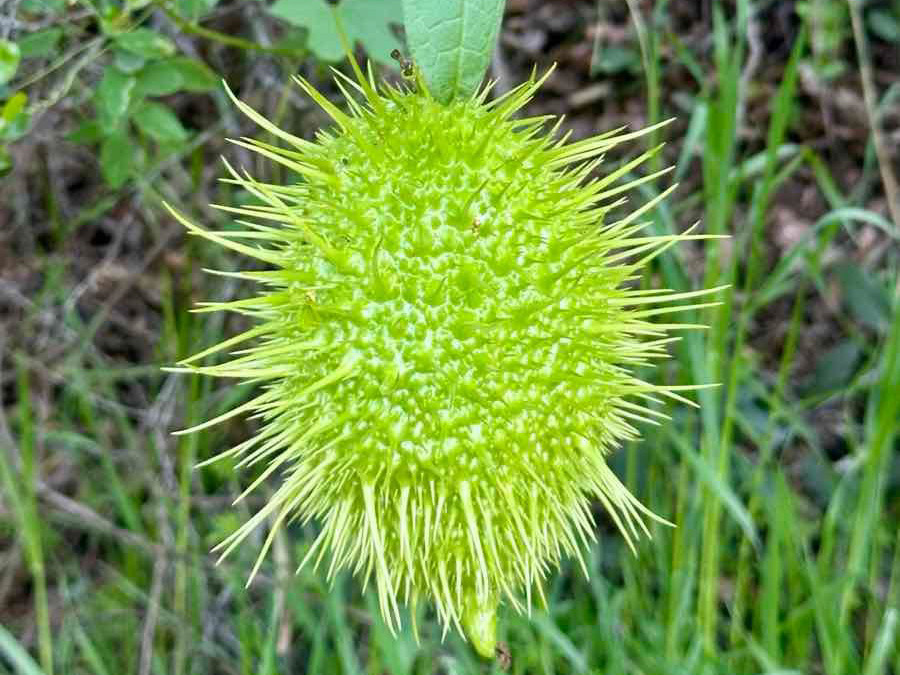
Wild cucumbers (Marah species) are native perennial vines found across much of California. Their lobed leaves and habit of scrambling through shrubs can lead to confusion with Cape ivy.
Look for thin, curling tendrils that grip nearby vegetation. White flowers and rounded to oblong, prickly fruits provide additional identification clues.
The vine grows from a large underground storage organ. Aboveground growth may die back during summer when moisture is limited, then return in a later growing season. Seasonal dieback supports an identification, but should be considered alongside the stems, leaves, flowers, and fruit.
A native vine growing vigorously does not automatically need removal. Consider its place in the landscape and whether selective management is needed to keep paths open or protect nearby planting.
English Ivy
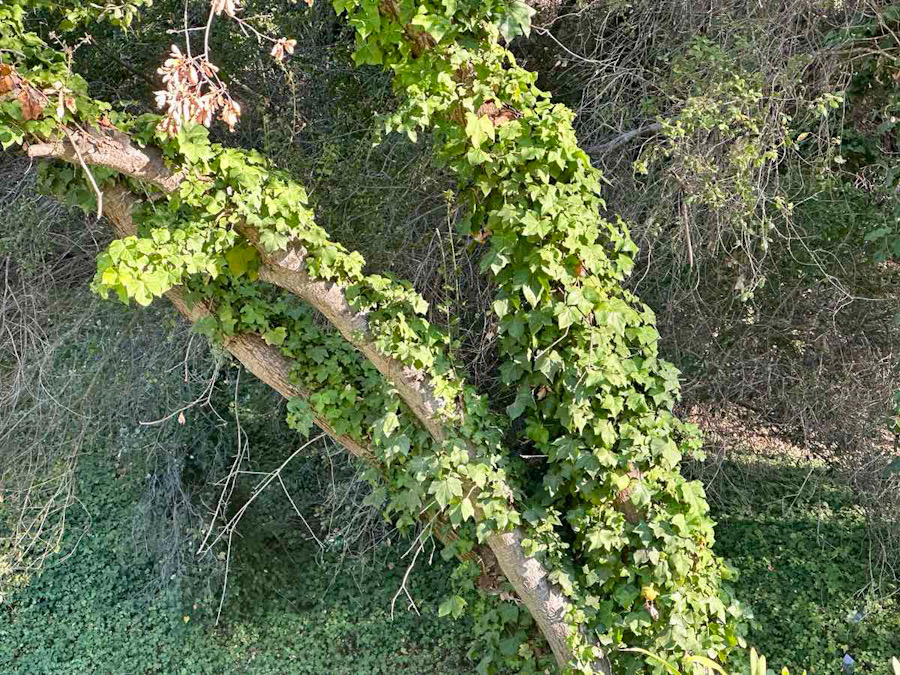
English ivy (Hedera helix) is an evergreen vine that spreads across the ground and climbs using aerial rootlets. Older stems become woody, and the leaves are typically glossy and leathery.
Leaves on trailing and climbing shoots usually have three to five lobes. Mature flowering shoots can have unlobed leaves, so leaf shape alone may be misleading.
In natural areas, English ivy can form dense groundcover and climb into trees, competing with other vegetation. Cal-IPC classifies it as an invasive plant with a High rating.
Check both the ground and the supporting tree or shrub when assessing a patch. Plan removal to protect bark, roots, and nearby plants, with follow-up checks for regrowth.
Quick Field Comparison
| English Ivy | Cape Ivy | Wild Cucumber | |
|---|---|---|---|
| Status (Cal-IPC) | Invasive (High) | Invasive (High) | Native |
| Stems | Woody with age | Smooth and fleshy | Slender, green |
| How it climbs | Aerial rootlets | Twining and scrambling, plus creeping stolons | Curling tendrils |
| Leaves | Leathery, evergreen; usually lobed on climbing shoots, unlobed on flowering shoots. | Glossy, hairless, pointed lobes, small ear-like lobes at base | Rougher, broader lobes |
| Flowers | Small, greenish (in fall) | Small yellow flower heads (mostly winter) | Small flowers white to cream (late winter to spring) |
| Fruit | Dark berries | Small, dry fruits with fine hair | Rounded, spiny |
| Dry season | Evergreen | Stays green | May die back in summer |
Compare several features on the same stem. Mixed vines, young growth, and seasonal changes can make a single leaf or growth habit misleading.
Before You Pull the Vine
Trace the vine before pulling. Where several species grow together, follow each stem and compare how it climbs, its leaves, and any flowers or fruit.
If identification remains uncertain, photograph the details and seek help. You may need to return when flowers or fruit are present.
For confirmed Cape ivy or English ivy, plan removal around nearby plants, tree bark, roots, and soil conditions. Collect material carefully, check local disposal guidance, and revisit the area for regrowth. Cape ivy fragments can resprout, so avoid scattering them or adding them to home compost.
For native wild cucumber, consider whether it can remain or needs selective management around paths and valued planting.
Look closely. Identify first. Then decide.
Helpful Resources
- UC IPM — Wild Cucumber Identification — identification features, growth habit, flowers, and fruit of Marah species.
- California Invasive Plant Council— Cape Ivy — distribution, ecological impacts, and management information.
- California Invasive Plant Council — English Ivy — identification, invasive-plant assessment, and management resources.
 Start the Conversation