
Field Notes · Restoration
Beyond the Lawn: Designing a Landscape That Works With Nature
Start by asking what your lawn is for. It may provide space for play, pets, or gathering. Other areas may be rarely used and offer room for something different.
Replacing those unused areas with planting suited to the site can create more habitat and seasonal interest while reducing irrigation needs. Paths, seating areas, and open spaces can keep the garden useful.
The right balance depends on your soil, climate, available water, and how you want to spend time outdoors.
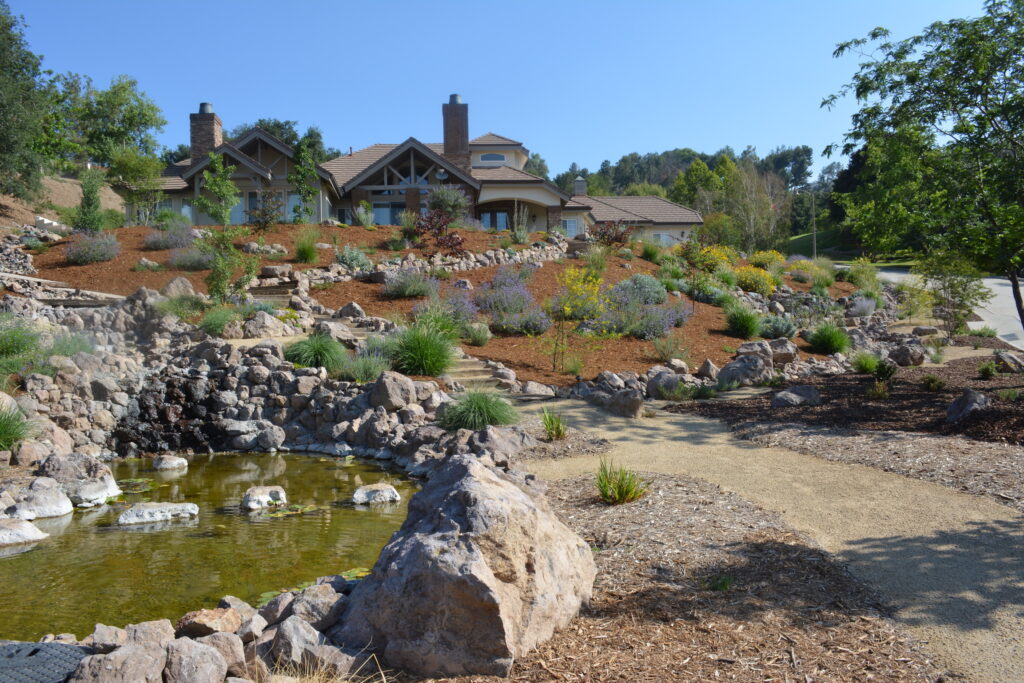
The Illusion of the Green Carpet
A green lawn can look simple, but keeping it that way through California’s dry season takes water and regular care. The demands vary with the grass, climate, soil, and how closely it is maintained.
Look at where that effort serves a purpose. A well-used play area may earn its place. A narrow strip beside the driveway or an unused front lawn may offer an opportunity for different planting.
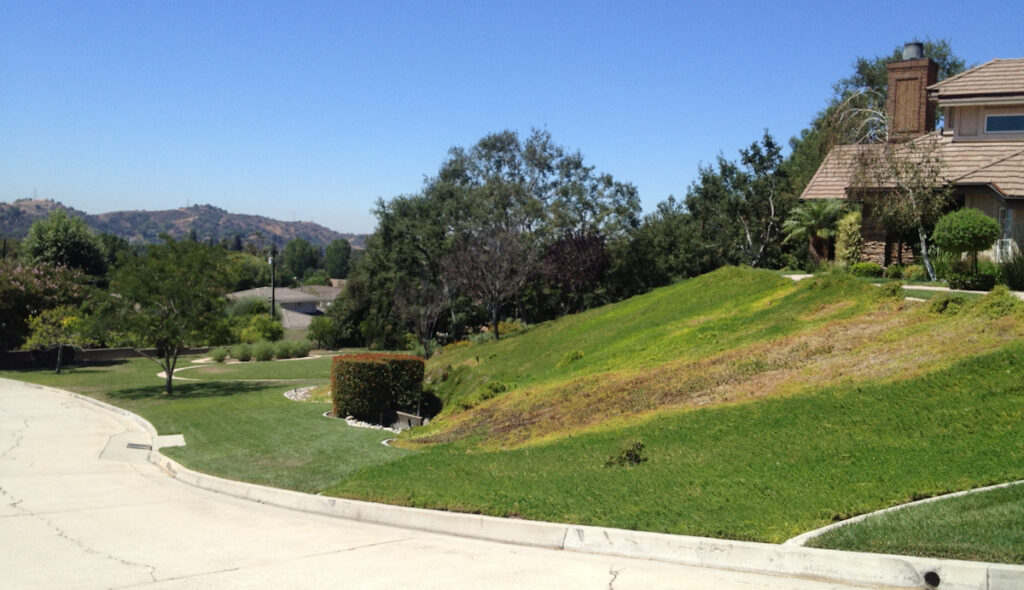
Rethink How the Garden Uses Water
Review where irrigation goes and what it supports. Check for overspray onto paving, leaks, uneven coverage, and watering schedules that no longer match the season.
Where lawn is rarely used, consider replacing it with plants suited to the site and available water. Group plants with similar watering needs and adjust the irrigation layout to serve the new planting.
Allow for establishment watering. A newly planted garden needs attention while roots develop, even when the plants are adapted to seasonal drought.
Water savings depend on what you plant, how much lawn you retain, and how the irrigation is designed and managed.
Why Artificial Turf Is Not the Answer
Artificial turf reduces the need to irrigate living grass, but it brings other costs:
- Heat. In direct sun, synthetic turf can become much hotter than living grass.
- Habitat. A plastic surface provides no living foliage, flowers, or roots to support the relationships found in planted ground.
- Materials and waste. Plastic fibers can wear and shed. The surface eventually needs replacement, with removal and disposal to consider.
- Upkeep. Debris, weeds, pet waste, and odors still need attention.
For a garden intended to support soil and wildlife, begin with living planting suited to the site. Where you need a durable surface for walking or gathering, choose materials around that use and plan the drainage carefully.
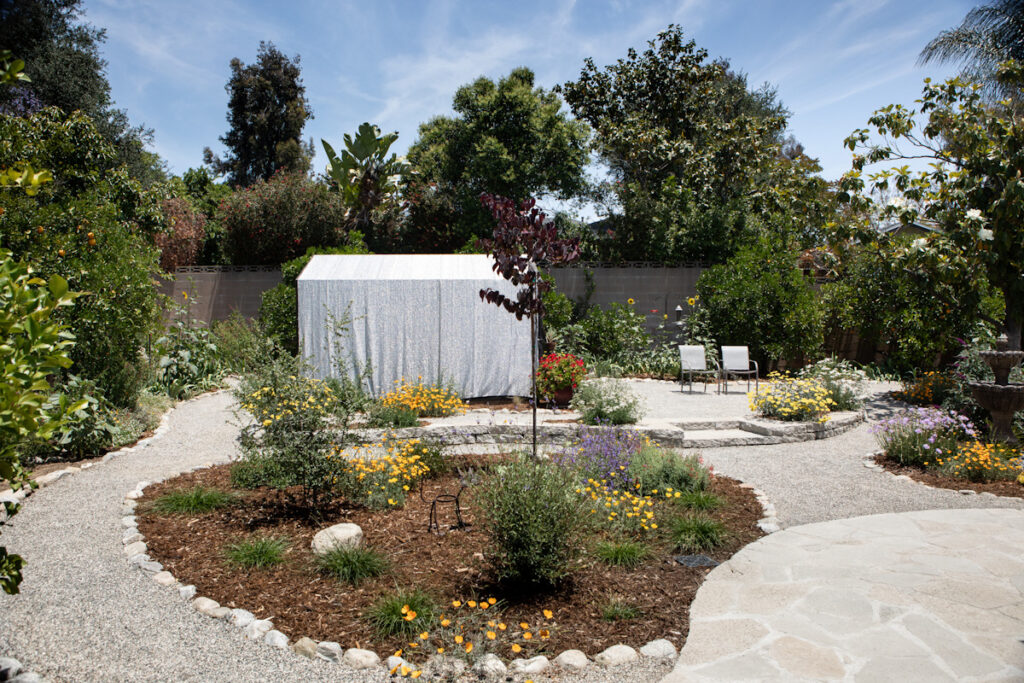
Make More Room for Habitat
A manicured lawn offers fewer kinds of food and shelter than a garden with varied planting. Replacing an unused section creates room for flowers, foliage, seeds, and fruit that support wildlife.
Choose locally appropriate native plants with different roles:
- Flowering plants that provide pollen and nectar.
- Host plants that feed butterfly and moth caterpillars.
- Shrubs and trees that offer cover and nesting places.
- Grasses and perennials that provide seasonal structure and seed.
Keep useful existing vegetation and connect new planting with nearby beds where practical. Include suitable undisturbed soil and retained stems for nesting insects, with placement guided by maintenance and wildfire-safety needs.
Even a modest planting area can add resources that were scarce in the lawn.
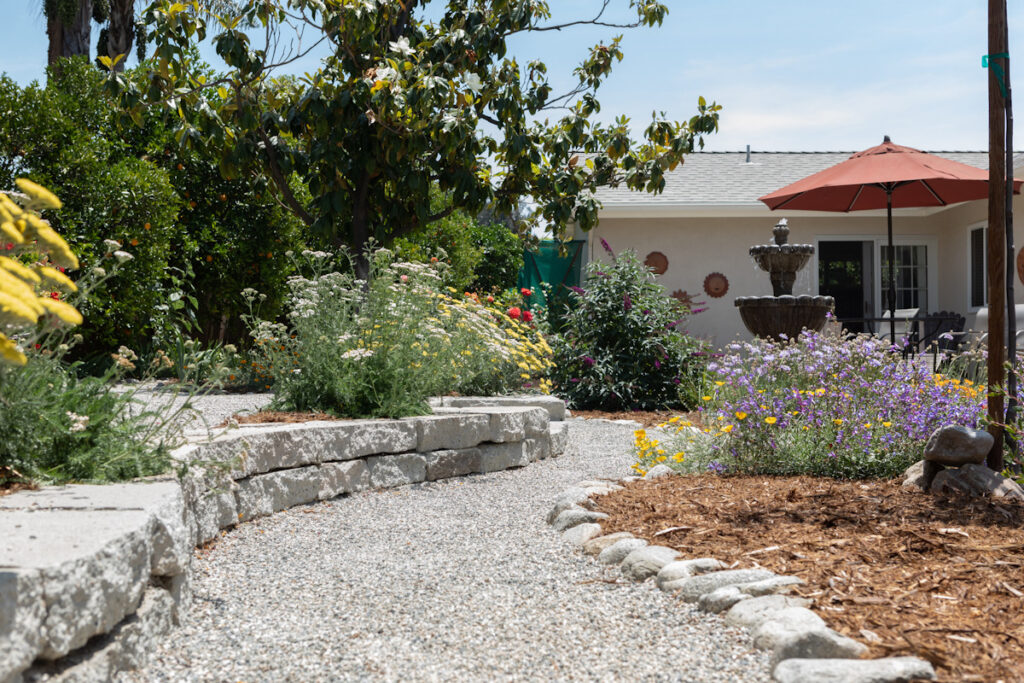
Design for Seasonal Change
A varied planting gives you more to notice through the year: new growth, flowers, seed heads, changing foliage, and the branching forms revealed when leaves fall.
Choose plants for more than their peak bloom. Consider how they look during summer dryness, winter rain, and dormancy. Combine evergreen structure with plants that bring seasonal color and movement.
Use paths, defined edges, and repeated plant groupings to give the garden a clear form as its appearance changes. Allow room for mature growth and plan seasonal cutting or cleanup around habitat and wildfire-safety needs.
The aim is a garden whose changing appearance feels considered and is practical to care for.
Core Principles of Natural Landscape Design
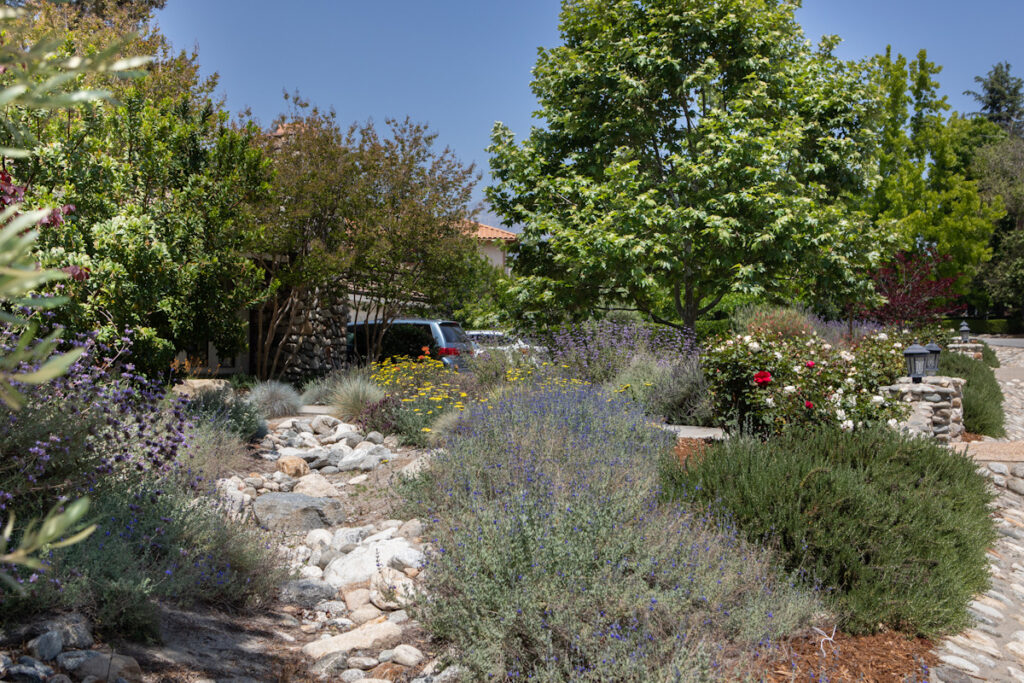
Plan the planting, water, materials, and everyday use together.
- Earthwork and drainage. Observe existing slopes and runoff before changing grades. Where appropriate, berms, swales, or rain gardens can help manage water, with a planned route for overflow.
- Paths and gathering spaces. Put durable surfaces where people need to walk, sit, or gather. Choose materials for access, comfort, and maintenance. Permeability depends on the whole installation, including its base and underlying soil.
- Layered planting. Combine suitable trees, shrubs, grasses, perennials, and groundcovers. Allow for mature growth, preserve useful views, and keep routes clear.
- Soil and ground cover. Protect existing soil from compaction and unnecessary disturbance. Use suitable mulch or living cover where appropriate, while retaining selected nesting areas and meeting wildfire-safety needs.
Start with the features the property needs and develop the design around them.
Cultivating Curb Appeal with Purpose
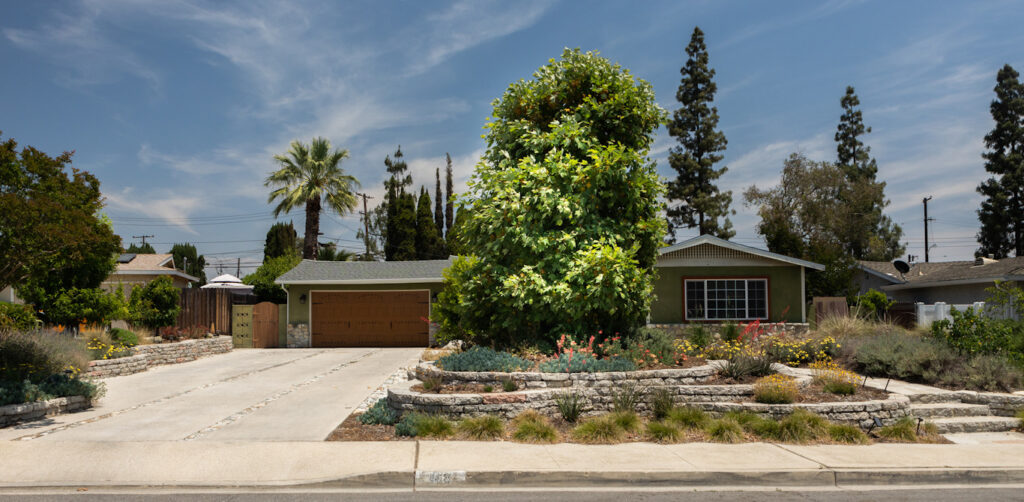
Transforming a yard from a high-maintenance turf lawn into an eco-friendly living landscape is more than an aesthetic upgrade — it’s an act of ecological restoration right on your home’s footprint.
Begin with one area of lawn that sees little use. Decide what would serve that space better, then plan the planting, access, irrigation, and care together.
Defined edges, clear paths, and repeated planting can give a varied garden a deliberate appearance. Keep the spaces you use, retain suitable established plants, and allow room for the new planting to mature.
Work in phases that fit your budget and maintenance capacity. Observe each area through the seasons and use what you learn to guide the next change.
 Start the Conversation