
Field Notes · Materials & Design · Water & Soil
Let the Land Do the Work: Berms, Swales, and Rain Gardens
The goal isn’t to drain your landscape — it’s to give every drop of rain a reason to stay a little longer.
Rain reveals how a landscape works: where water collects, where soil washes away, and where runoff leaves the property.
Berms, swales, rain gardens, and dry creek beds can help guide that water. Where conditions allow, they slow runoff and give it time to soak into the soil. The approach begins with observation—understanding the slope, soil, existing drainage, and where overflow can safely go.
Why contour? The sustainability case
A conventional yard sheds water. Roofs, paving, and compacted ground can send rainwater off a property before it has time to soak in. Along the way, runoff may carry soil, fertilizer, and other pollutants into nearby waterways.
Where the site is suitable, shaping the landscape to slow and absorb runoff can:
- Reduce erosion by easing the force of flowing water.
- Hold more seasonal moisture in the soil.
- Help filter some pollutants before water reaches local waterways.
- Support habitat through planting suited to wet winters and dry summers.
These benefits depend on the soil, slope, planting, and how much water enters the system. A safe overflow route remains part of the design.
Berms & swales: shaping the flow
A swale is a shallow channel that collects water. Depending on its purpose, it may follow a level contour to hold runoff for infiltration or slope gently to carry water toward another part of the landscape.
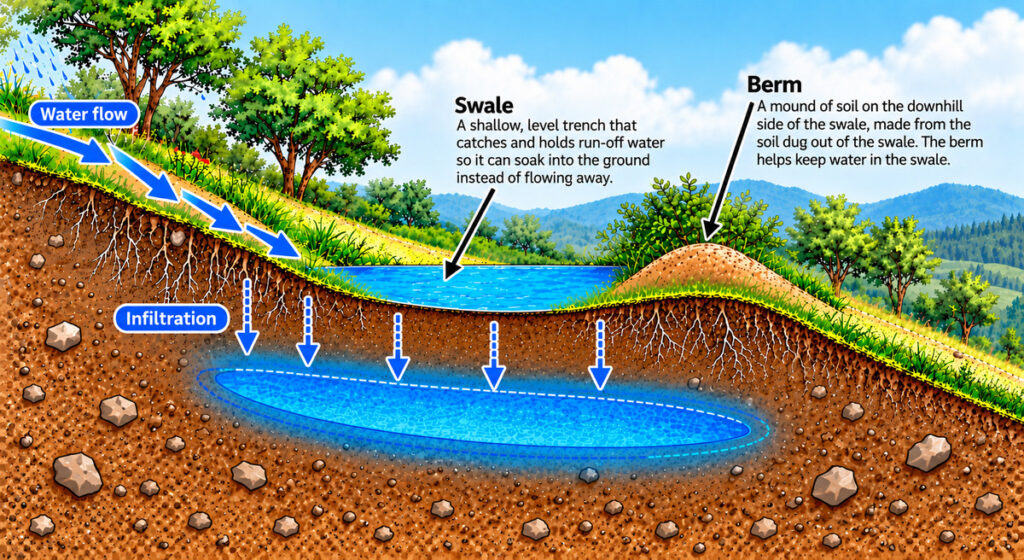
A berm is a low mound of soil that can help shape and direct that flow. Where appropriate, the two work together to slow runoff and give it time to soak in.
Their placement depends on the slope, soil, and amount of water they receive. Overflow needs a planned route so it can leave the system without eroding the soil or threatening buildings and neighboring properties.
Together they read as soft, rolling waves in the landscape. Contour features don’t look like drainage equipment; they blend naturally into the landscape creating a naturalized drainage system.
The rain garden: where the water becomes the garden
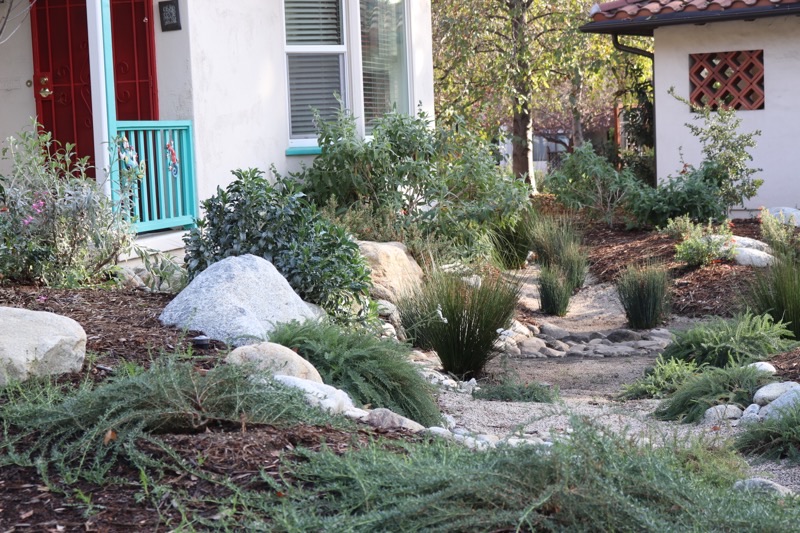
A rain garden is a shallow planted depression that collects runoff and holds it temporarily while it soaks into the soil. Between storms, it becomes part of the garden again.
Plant according to how water moves through the space. The lowest areas need species that tolerate temporary wet conditions and seasonal drying. Higher edges suit plants that prefer drier soil.
With plants matched to the site, an established rain garden may need little or no supplemental irrigation. Watering needs depend on the species, local climate, and conditions through the dry season.
The dry creek: beauty with a job to do
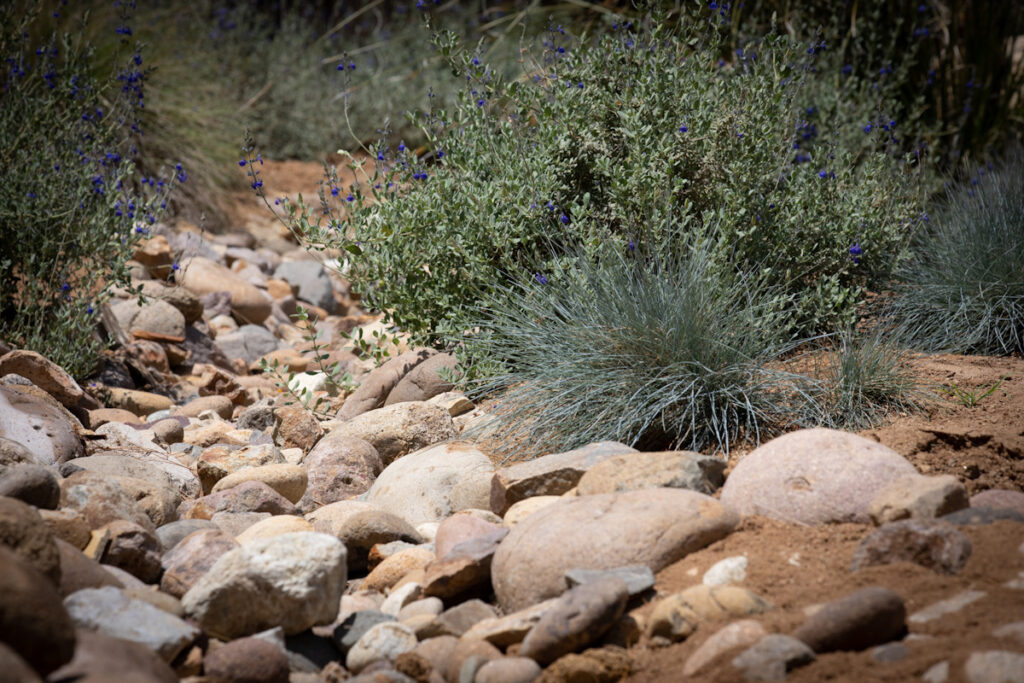
A dry creek bed is a stone-lined channel that guides runoff through the landscape. It can carry water between planted areas or provide an overflow route from a swale or rain garden.
Its shape and materials should respond to the water it receives. Channel width, slope, and stone size all matter; decorative pebbles alone may shift or wash away in concentrated flow.
In dry weather, the creek bed adds texture and a sense of movement to the garden. Boulders, smaller stones, and planting along the edges can help it settle into the surrounding landscape. Start with a clear destination for the water, then develop the form around that purpose.
Bringing it together
These features work best when planned as a connected system. A swale might carry roof runoff to a rain garden, while a dry creek bed provides a route for overflow. The combination depends on the site; some landscapes need only one carefully placed feature.
Begin by watching what happens during rain. Trace where water enters, where it collects, and where it leaves. Check how readily the soil drains and what lies downhill before deciding where to hold or redirect runoff.
Start with a manageable project suited to those conditions. Observe it through several storms, keep inlets and overflow routes clear, and adjust as needed. Understanding how water moves through your landscape will guide both the design and its ongoing care.
Helpful Resources
- UCANR: Coastal California Rain Gardens: Capture Rain and Let the Benefits Flow – A practical introduction to rain garden location, sizing, soil drainage, plant selection, and overflow planning by UC Agriculture and Natural Resources.
 Start the Conversation